Foam vs Modular: Real Scans, Real Science
The best way to compare mattresses? Use pressure mapping—not marketing. Foam models often look supportive until tested. Modular zones respond with diagnostic precision. This page reveals the real scan results from different body types, postures, and mattress types.
🧪 Comparison Modules: Foam vs Modular
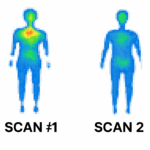
🔍 Scan #1: Standard Memory Foam (Legacy Build)
Observation: Hotspots around shoulders and hips show peak compression.
Diagnostic Note: No anatomical variance—same response across builds.
📉 Outcome: Overpressure leads to misalignment and restless sleep.
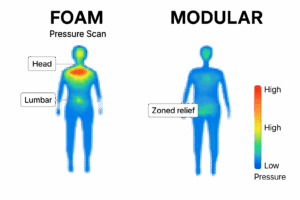
🔬 Scan #2: Modular Design with Zone Matching
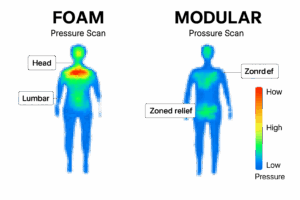
Observation: Pressure relief adapts across build, posture, and sleep style.
Diagnostic Note: Shoulder zones offload weight for side sleepers; lumbar zones increase support for back sleepers.
📈 Outcome: Balanced spinal alignment, improved muscle recovery.
 Visual Contrast
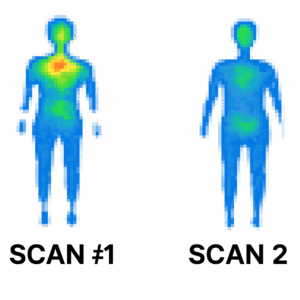
Left: Foam Scan → Heatmap shows uniform compression and residual pressure.
Right: Modular Scan → Zoning varies across regions; clear drop in red zones.
Text Note: Images for educational use only—exact scan outcomes vary.
What does scan data actually reveal about foam vs modular mattresses?
Foam mattresses show continuous pressure regions and torque across shared zones, while modular systems display precise relief with individualized support mapped to each sleeper’s spine, hips, and shoulders.
Are there real anatomical risks with one-size-fits-all foam?
Yes. Foam creates consistent collapse under heavier regions, leading to rotational strain and joint mismatch. Modular systems prevent this by isolating firmness zones per side and body region.
Why haven’t foam brands adopted modular layering?
Foam manufacturing relies on bulk pours and shared cut profiles. Modular systems require individualized configuration and clinical mapping, which exposes their design limitations when tested side-by-side.
How does modular prove clinical superiority in side sleeping?
Modular layouts isolate hip and shoulder regions, preventing compressive collapse. Scan images confirm reduced strain and better alignment—foam simply can’t replicate this without anatomical zoning.
Do any foam brands publish scan data like this?
No. Foam brands rarely show diagnostic scans because they highlight spinal torque and high-pressure zones. Modular brands use real data to prove individualized efficacy—foam can’t compete on transparency.