Couples Compatibility: How Modular Solves the Comfort Divide
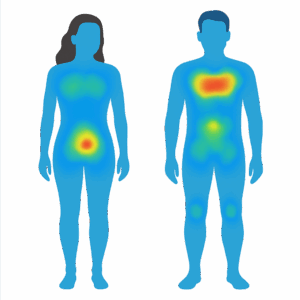
One body runs hot. The other runs cold. One needs firm lumbar relief, the other wants shoulder softness. Foam mattresses force compromise. Modular design eliminates it. See how dual-zone mapping creates perfect sleep—for both sides.
Why Comfort Is Always Split in Foam
One sleeper needs firm lumbar relief, the other wants shoulder softness. Foam mattresses force compromise—because they use one uniform layer across the entire surface. Modular design eliminates this tension by mapping each sleeper’s pressure zones independently.
Real Scans, Real Differences
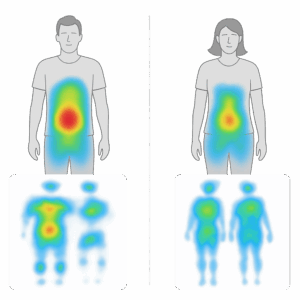
How Pressure Mapping Reveals Compatibility
Our scans show most couples have opposite pressure patterns. One side spikes in lumbar compression while the other shows shoulder tension. Foam mattresses can’t adjust for both. Modular zones react to shape—not just weight—so each sleeper gets personalized alignment.
High-pressure zones often appear opposite between partners—especially across lumbar and shoulder regions. Our modular system adapts with live diagnostics, not generic fill. No more “his side vs her side” debates—just precision-mapped sleep.
📊 Swap, Adjust, Solve

Change Zones Without Changing Beds
If needs evolve—shoulder injury, pregnancy, new build—you can swap your zones and re-optimize instantly. No need to buy a new mattress. Our modular logic protects both your comfort and your investment.
Two Sleep Profiles. One Mattress
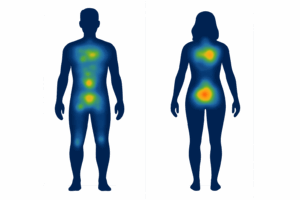
Zoned latex layers let us customize each half independently. No compromise on firmness, temperature, or alignment. You get orthopedic logic. They get cloud-like comfort. In modular, opposites don’t clash—they coexist.
Book Your Couples Scan Compatibility isn’t a guessing game.
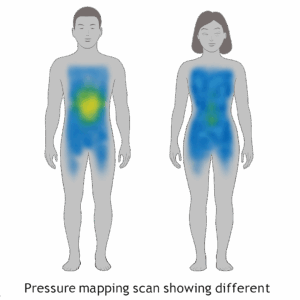
Our pressure mapping diagnostics show exactly how to fit both sleep profiles. Schedule your scan—see the data, not the drama.
What is split-zone comfort—and how does it help couples?
Split-zone comfort separates each sleeper’s modular support zones to match individual scan data—eliminating the pressure mismatches caused by foam mattresses with shared layers.
How does modular outperform memory foam in pressure mapping?
Modular mattresses adapt each zone to the sleeper’s anatomy using clinical mapping, while memory foam compresses uniformly—causing spinal torque and soft tissue strain across couples.
Can modular mattresses reduce spinal torque from misaligned zones?
Yes. Modular systems correct zone misalignment by configuring firmness by body region, especially for couples with differing shoulder or hip widths.
Why do foam brands avoid showing real scan data?
Because scan data reveals the pressure mismatches, spinal torque, and muscle strain their shared-layer designs cannot correct—modular systems make that contrast visual and clinical.
Is modular better for side sleepers with hip and shoulder pain?
Absolutely. Modular layering isolates the hip and shoulder zones with targeted firmness to prevent collapse and misalignment—especially critical for couples with anatomical differences.